Why we can’t just wait for AI to solve the energy transition
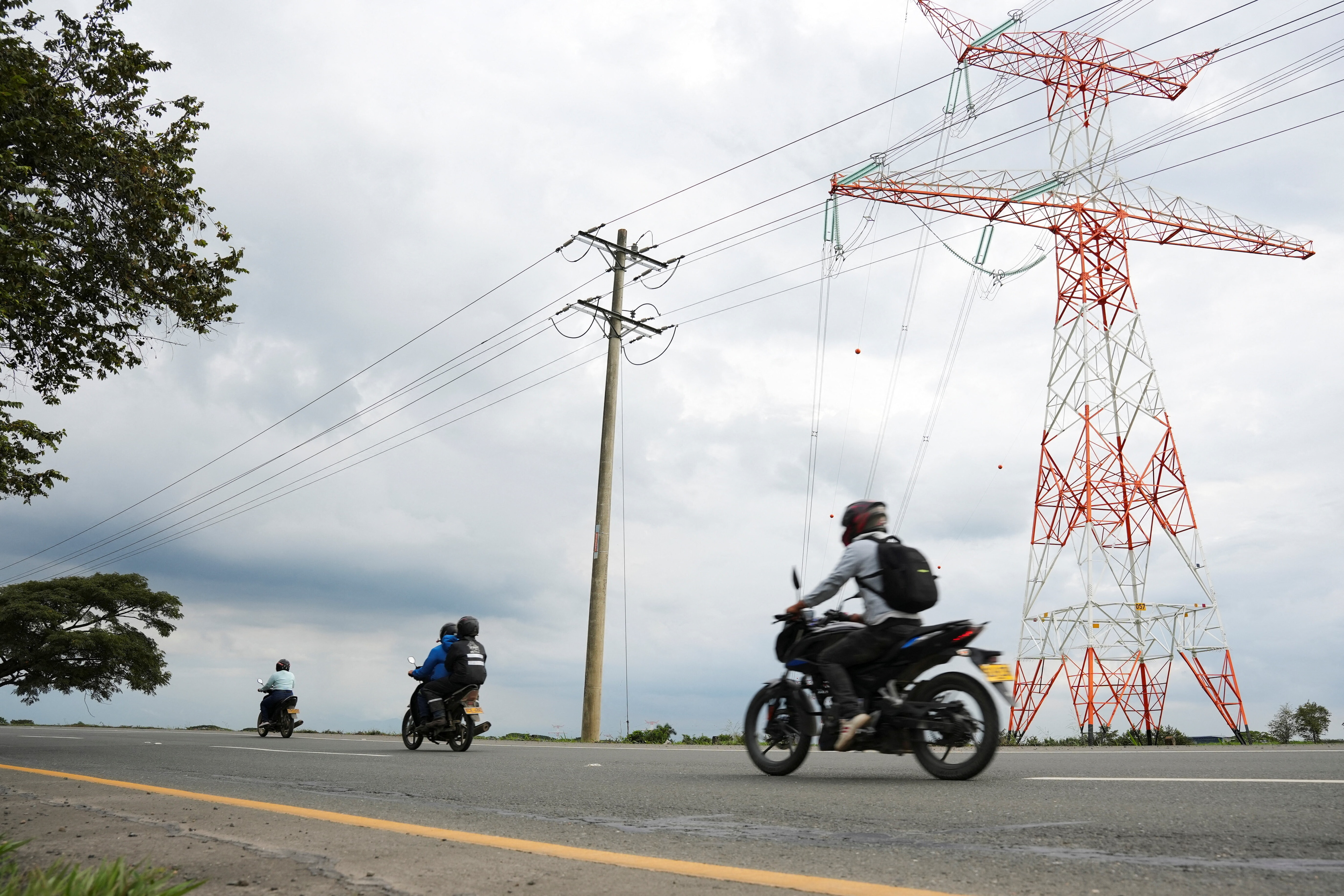
AI's staunchest evangelists say that, despire massive power consumption, AI is the solution to problems with the energy grid – the reality is more complicated. Image: REUTERS/Jair Coll
- A single hyperscale data centre can consume as much electricity as a city of 1 million people and surge demand within milliseconds.
- AI could optimize dispatch and relieve grid congestion, but that relies on upgrading the sensing and control built into physical grid infrastructure.
- Upgrading the grid now, before the smart electricity revolution really takes hold, is crucial.
Energy transition sounds like a clear, measured process. We gradually move from A to B; from fossil fuels to sustainable sources. Simple.
Yet, in the industry it feels more like a storm. That’s because, for the first time in a hundred years, we are rewriting the rules of power. Electricity generation that used to be large and uniform is now distributed across myriad variable sources. Electricity use is rising like never before, exacerbated by shifting the power demand of entire industries, like heat and transport, onto the grid.
As a result, power flows that used to be steady, predictable and linear are now surging, dynamic and multidirectional.
And the grid connecting it all is generations behind. Much of its building blocks are at the end of their lives. More worryingly, its rigid, fundamental design conceived over 100 years ago doesn’t work with the dynamics of this storm. We see this in interconnection bottlenecks, power quality issues or ever-more-frequent blackouts.
This means our transition is anything but simple: as we progressively overhaul power production and use, we must also reinvent the very system that distributes it all around.
And then, into the middle of this overhaul arrived AI with power hungry data centres.
Can AI be the solution?
It’s worth noting that pressure to expand and modernise grids existed regardless of the AI boom. Still, data centres strain their local grid: a large hyperscale data centre can consume the same amount of electricity as a city of 1 million people. A “city” that can completely disconnect from the grid without warning, and where pulsing loads of synchronised GPUs can surge demand from near zero to hundreds of megawatts within milliseconds.
Many have argued that, despite the huge pressure data centres exert on the grid, that AI itself, and the efficiencies it brings, could actually help to optimize electricity system processes and reduce the burden on the grid.
In the context of the grid, AI may find new ways to create better, smarter, more efficient power systems. This is a comforting thought – but waiting for this is futile today.
The future power system we need
Working backwards from the goals of the energy transition, we need power systems that are flexible. Self-healing. Systems that bend, not break under the dynamics of ever-changing power sources and uses.
It should be ready to deal with the known unknowns: situations and technologies not yet invented that may come with yet unseen power profiles.
A truly future-proof, resilient grid will therefore be able to sense, decide, and act at the speed of light to keep the lights on.
Intelligence is a component of this, but it is not the bottleneck today.
AI’s strength lies in processing a great deal of data and identifying patterns. It could therefore help with asset management and planning, even grid mapping through tools like computer vision and drones to support better design. But it could be game-changing for optimizing dispatch, relieving congestion and orchestrating flexibility across the system. In other words, the decision-making component.
However, without the complementary sensing and control built into the system it will be fundamentally limited to identifying opportunity and never actually delivering it.
We need to upgrade today’s power system with physical solutions to allow AI to act as a value multiplier.
The physical shortcomings of the grid
While we have made huge changes to electricity generation and consumption, the grid itself has seen little technological innovation.
Critically, we have limited visibility into system dynamics; we often see metering data at the point of producing power or consuming it: the input and output. This alone was a complex optimization problem. But since a truly flexible grid will have unknown variables in the middle, even AI won’t be able to solve its problems without added visibility. Gathering data from within the grid itself will be critical.
More importantly, we are limited in how we can intervene. Today, tuning the system through connected assets is our best option. This means curtailing or bringing online power plants, or turning consumption up or down through collective action, like demand side response and virtual power plants (VPPs).
Doing all this through the system’s endpoints – even with AI – is slow. As the Iberian blackout last year showed us: milliseconds count in power. AI will be the most helpful if we arm our power system building blocks with the capability to both see and react fast.
What we need today
The priority before any meaningful AI intervention is enabling better visibility and control embedded in grid hardware. Without these, the future system, no matter how smart, won’t be able to reliably manage dynamically changing power flows.
We need such sensing and control mechanisms working near instantaneously to prevent cascading failures. Deploying these capabilities across the whole network, in building blocks, each with embedded intelligence creates the decentralized structures that can act fast in their local area and collectively maintain system balance in real-time. Importantly, these intelligent building blocks need to be hardware and software designed together, engineered with systemic operation in mind. Supercapacitors and batteries, intelligent transformers, and many others, will all be a source of this. The key is to synchronise their operations to common protocols.
In upgrading the building blocks, time is of the essence. As we respond to a major cycle of replacement of aging infrastructure and grid expansion due to increased power capacity, we shouldn’t be repeating the same old technology. We should be putting in place the foundations of a system that is ready for when we turn the smart switch on.
Just as AI performance is limited by CPUs and GPUs, grid intelligence is limited by physical infrastructure: the building blocks of the power system. For AI or any intelligent software to have the best shot at acting as a value multiplier, we need the capable foundations for it to act upon.
Don't miss any update on this topic
Create a free account and access your personalized content collection with our latest publications and analyses.
License and Republishing
World Economic Forum articles may be republished in accordance with the Creative Commons Attribution-NonCommercial-NoDerivatives 4.0 International Public License, and in accordance with our Terms of Use.
The views expressed in this article are those of the author alone and not the World Economic Forum.
Stay up to date:
Energy Transition Index
Related topics:


Forum Stories newsletter
Bringing you weekly curated insights and analysis on the global issues that matter.
More on Energy TransitionSee all

Cheukai Makari
September 16, 2026


